DocuAudit
Freight invoice intelligence platform for audit teams
The Problem
Working in freight audit and payment, I observed a recurring operational challenge: Business Process Outsourcing (BPO) teams were manually processing thousands of freight invoices daily. The process was slow, error-prone, and expensive.
The consequences were tangible:
- Errors led to reprocessing costs that strained operational budgets
- Client relationships suffered when mistakes delayed payments or created disputes
- Scalability was blocked as manual processing couldn't keep pace with volume growth
- SLA pressure mounted as audit teams struggled to meet turnaround commitments
More critically, manual processing couldn't keep pace with the volume and complexity of modern freight operations. The organization needed a solution that could scale without proportionally scaling headcount.
Users
Alex
BPO Invoice Processor
Pain Points
- Repetitive manual data entry across hundreds of invoices daily
- Time pressure creates accuracy trade-offs
- Different carrier formats require constant context-switching
Goal
Process invoices faster with fewer mistakes
“I know I'm going to miss something when I'm rushing through 200 invoices before lunch.”
Sarah
Audit Manager
Pain Points
- Quality control requires manual spot-checking
- Compliance requirements demand audit trails
- Team oversight is reactive, not proactive
Goal
Ensure accuracy and auditability of all processed invoices
“When a carrier disputes our findings, I need to explain exactly how we reached that conclusion.”
Michael
Finance/Compliance Lead
Pain Points
- Regulatory requirements are becoming stricter
- Data security concerns with external solutions
- Audit findings need to be defensible
Goal
Maintain compliance while improving efficiency
“We can't send client invoice data through some external AI API. That's a non-starter.”
Approach
The obvious solution might have been to deploy AI-powered document extraction. After careful analysis, I chose a rule-based approach instead. This wasn't a rejection of AI, but a deliberate decision based on four key factors:
1. Auditability
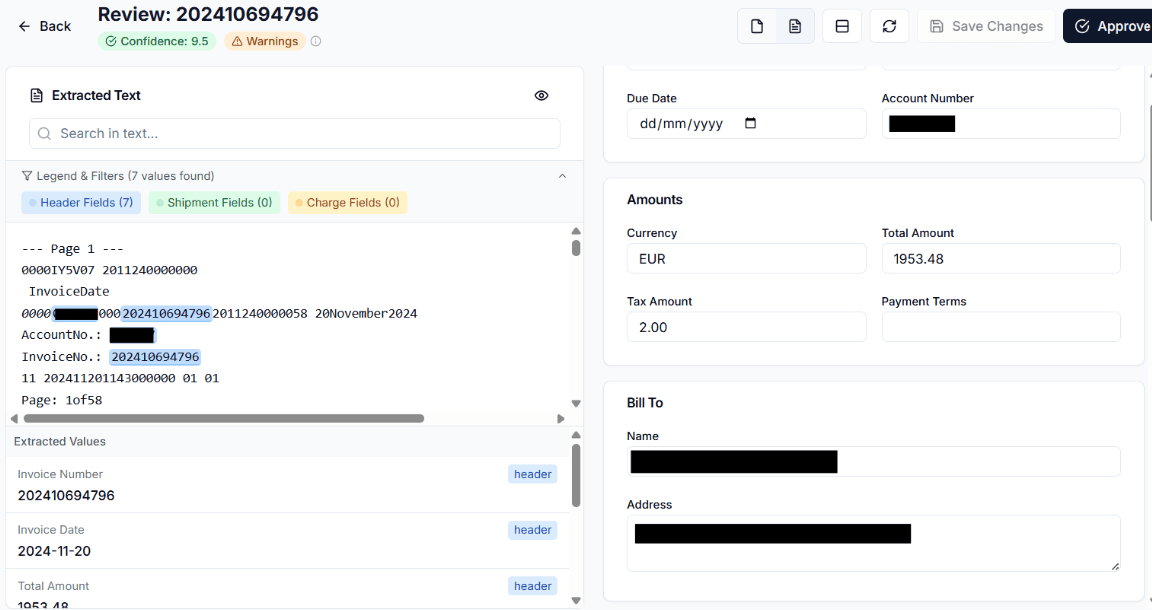
Finance teams need to explain every decision. When a carrier disputes an audit finding, the answer can't be "the AI decided." Rule-based logic provides a clear audit trail. Every extraction decision can be traced back to specific rules, making it defensible in disputes and compliant with internal controls.
2. Reliability
AI models can be inconsistent. The same invoice might get different results on different days. For financial operations, consistency isn't a nice-to-have. It's a requirement. Rule-based systems produce identical results for identical inputs, every time.
3. Data Security and Compliance
Freight invoices contain sensitive commercial data. Carrier rates, shipper information, and payment details can't flow through external AI APIs. Keeping processing on-premises with deterministic rules eliminates a significant compliance risk and keeps sensitive data within controlled environments.
4. Speed and Cost
Rule-based extraction is computationally lightweight. It processes documents in milliseconds, not seconds. At scale, this translates to significant infrastructure savings and faster turnaround times for audit teams.
Security & Compliance
Enterprise freight audit operates under strict compliance requirements. The architecture decisions were guided by:
- SOC 2 alignment: All data processing stays within controlled environments with proper access controls and audit logging
- ISO 27001 considerations: Data classification and handling procedures built into the extraction workflow
- No external data exposure: Rule-based approach eliminates the need to send sensitive invoice data to third-party AI APIs
- Complete audit trails: Every extraction decision is logged with the specific rule that triggered it
This enterprise-grade thinking was essential for stakeholder buy-in. The solution needed to demonstrate not just efficiency gains, but also compliance posture.
Implementation
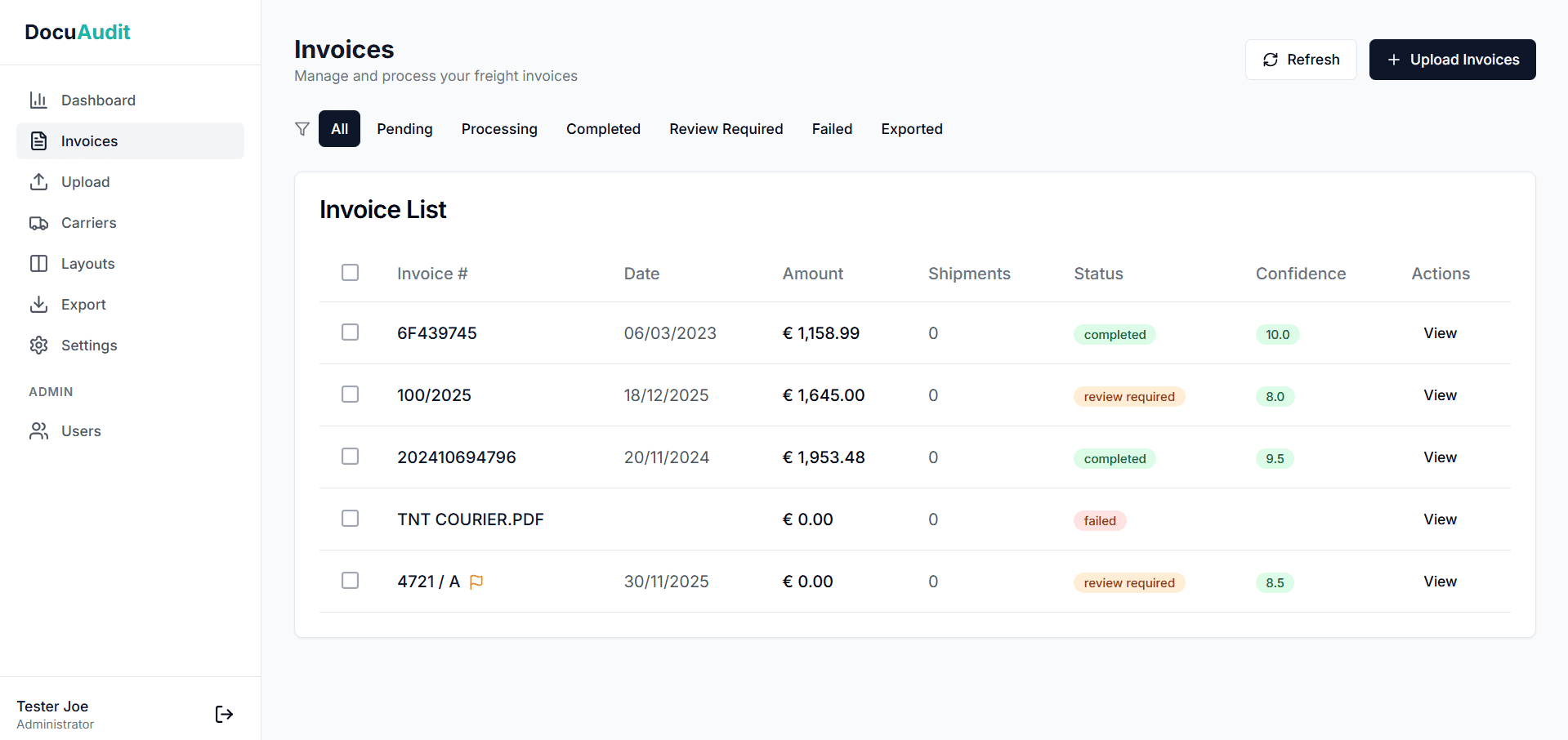
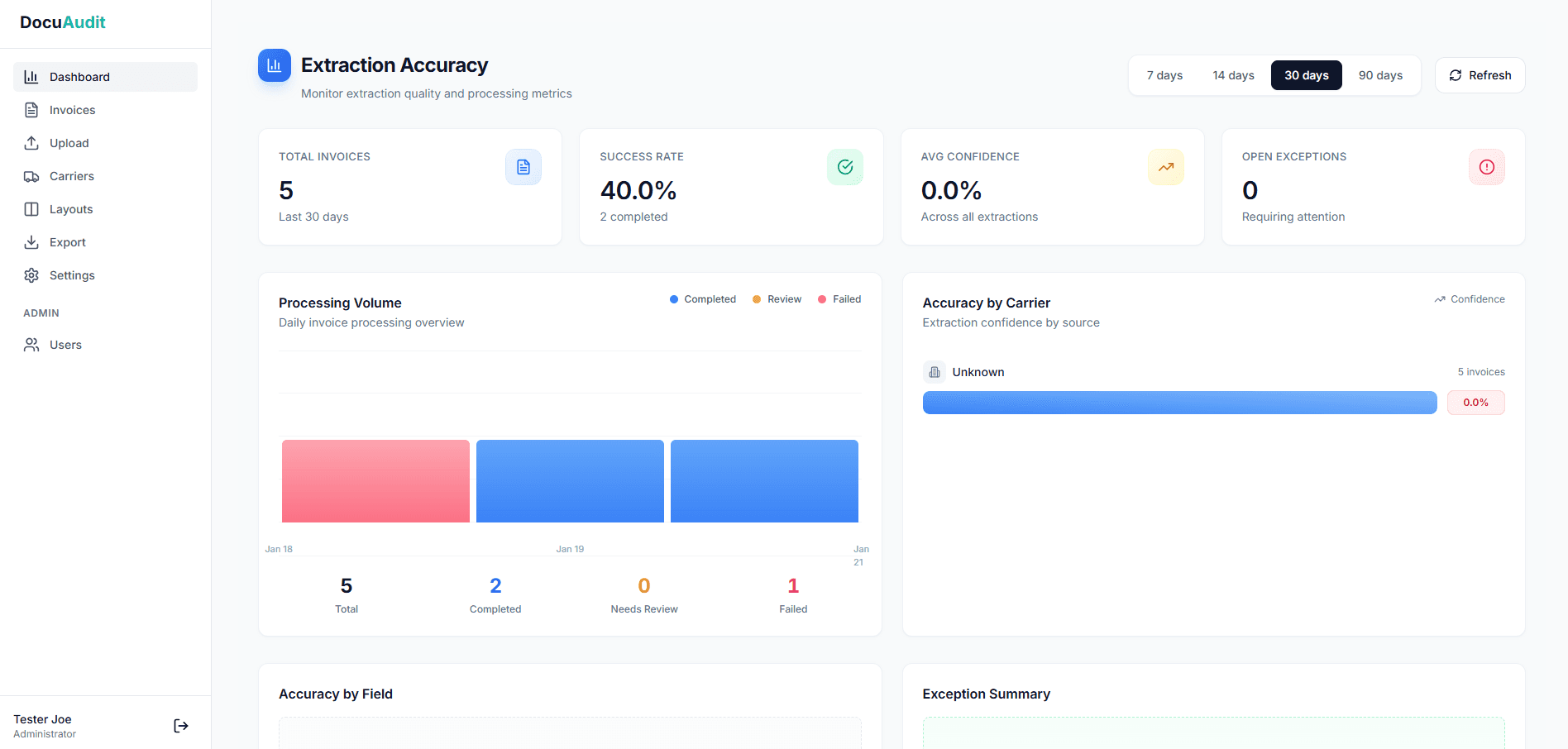
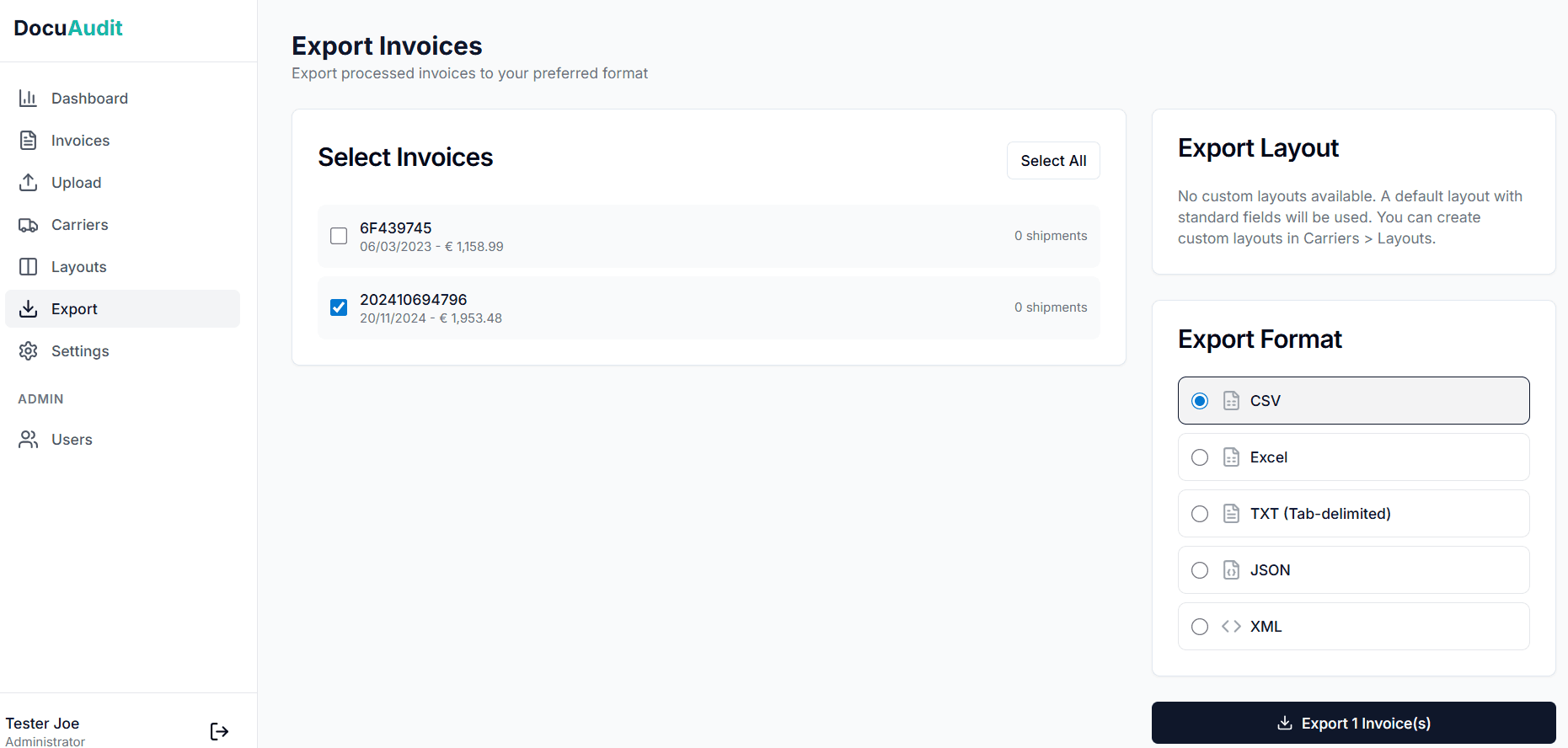
The solution focused on structured data extraction from freight invoices. Key implementation decisions included:
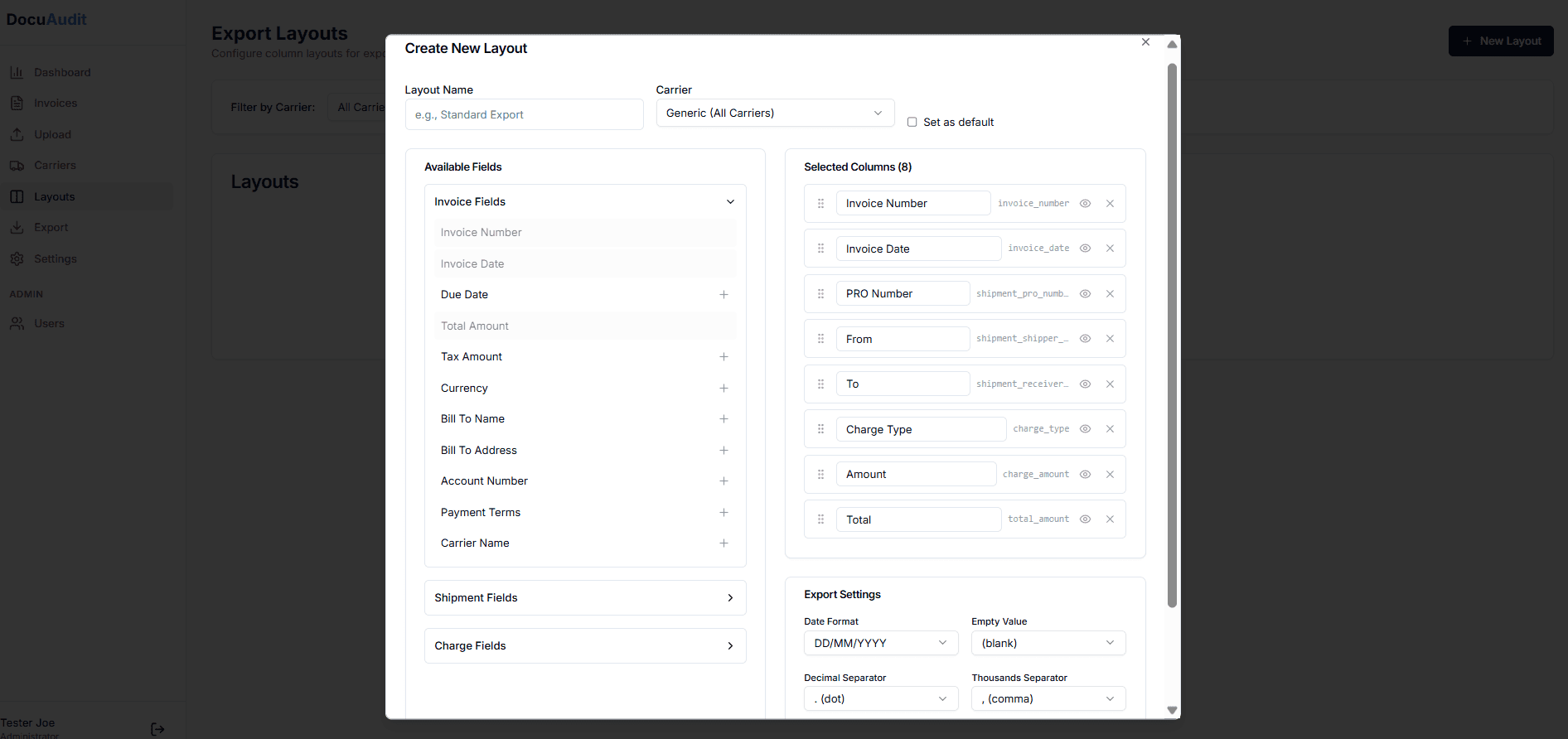
- Building a configurable rule engine that could adapt to different carrier invoice formats
- Designing the system to handle format variations without requiring code changes
- Creating feedback loops for audit teams to flag extraction issues
- Prioritizing processing speed to handle high-volume periods
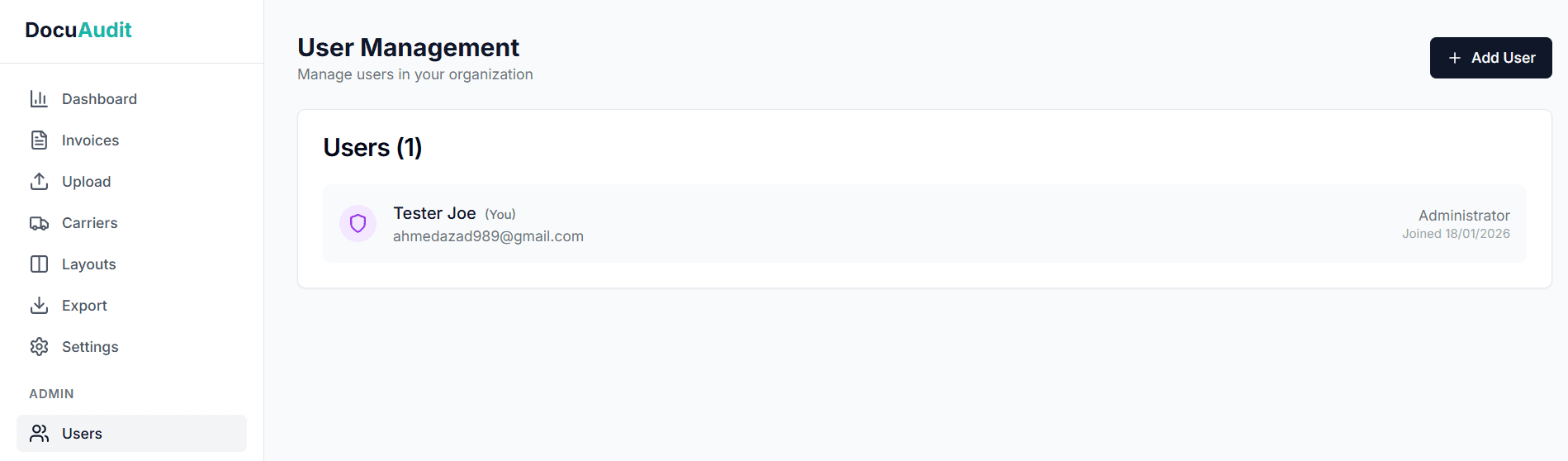
The prototype was built to validate the approach before committing to full development.
The Prototype
Outcomes & Validation
The prototype received positive validation from leadership across regions:
- General Manager (Europe) endorsed the approach and business case
- General Manager (US/Global) confirmed alignment with operational priorities
- Global Director validated the strategic fit
The organization ultimately decided to pursue an external vendor solution.
What I'd Do Differently
- Stakeholder alignment across regions: I received initial approval from my European team, but later discovered the US team was already working with an external vendor on a similar solution. The project was ultimately not continued because of this overlap.
- Before building, deeply investigate internal solutions across ALL regions. A simple cross-functional check would have surfaced this earlier and saved development effort.
- Understanding organizational dynamics is as important as building the right solution. Technical validation isn't enough; you need political validation too.
Impact
While the prototype wasn't deployed to production, the validation process confirmed that the problem was real, the approach was sound, and the value proposition was clear.
1000+
Invoices/Day
Processing volume target
4
Carrier Formats
Supported in prototype
3
Leadership Sign-offs
Regional validation
<100ms
Processing Time
Per invoice extraction
This project reinforced an important lesson: sometimes the most valuable outcome of a prototype isn't the code, but the clarity it brings to decision-making. And sometimes, discovering that another team is already solving the problem is itself a valuable outcome.